|
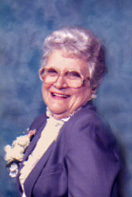
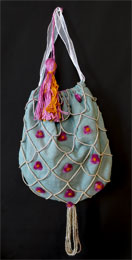
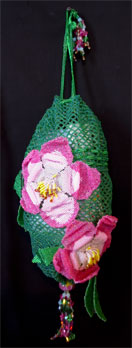
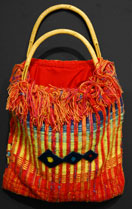
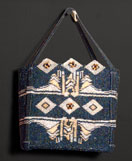
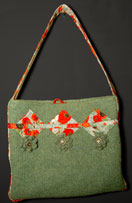
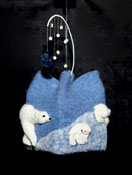
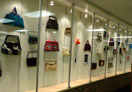
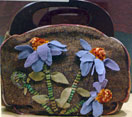
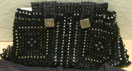
are you up for doing something different? we invite you to participate in an exhibit at the Fair showing the work of YOUR hands! There is no jurying - no stress. My grandmother, Beatrice "Lorette" LaLonde Cassidy passed away in 2002 (at age 98!) and left me her bag of patterns. I am the oldest granddaughter and the only one who she taught to knit and crochet who kept at it. It was difficult to go through, so I put it off. In 2008, I brought it with me to a "Do It In Public" meeting and we all eagerly and tenderly looked through the bag and found some great retro stuff! We thought it would be fun to take one of the patterns to interpret and create an exhibit for the Fair. The result was a stunning display of every kind of interpretation: knit, crochet, quilt, felt, beadwoven, sewn, etc. (see header above from our first exhibit) We continue the tradition each year to honor those who taught us and those who have inspired the work of our hands and our creativity. Thank you to Coats & Clark for permission to use these retro patterns!
it's "in the bag"! ready for a creative challenge? Create
our "retro" handbag - your
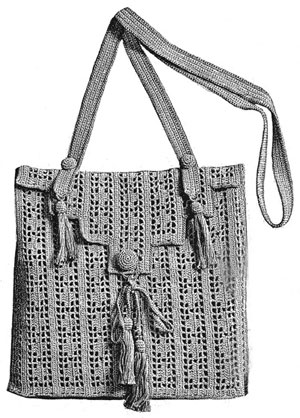
way - and we'll exhibit it for all to see at the Fair! This year's bag is from the 1925 publication "Clark's O.N.T. Book No. 23—100 Designs for Bags". Our bag is called "Hiking Knapsack". Ladies went The strap must use bottons and tassels or some form of dangly ornamentation. The bag must have a button closure and the flap must be "stepped" in shape, as in the photo. The bag must be kept in proportion with the smallest bag not smaller than 6" high and the largest not larger than 18" in any dimension. You can crochet it, knit it, bead it, weave it, felt it, quilt it, sew it...Let your imagination run WILD! Entry fee is $10 for the first bag and $7/ea for additional bags. The pattern will be e-mailed to you. If you wish to have a pattern mailed to you, there is an additional $7 postage and handling fee. to enter:
Pay entry fee by credit card, electronic check, or Paypal:
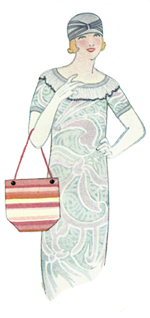
My grandmother (above) was married in 1925 - in a flapper dress! Actually, the "flapper" dress was not called "flapper" until 1926, when the dress remained similarly styled (loose and dropwaisted, usually sleeveless, promoting a "boyish" figure), but the hemline rose a few inches to the knee. For an interesting read on the etomology of "flapper" see en.wikipedia.org/wiki/Flapper. Flappers were basically high spirited and emancipated (especially in throwing off the stifling corsets and bloomers) both in dress and behavior.
Don't forget to sign up for our e-mail list and we'll keep you up to date with Fair plans. PLUS, your demographic information is helpful to us as we gain sponsorship. You'd be helping the Fair grow and we PROMISE that your information will be kept private. Click here to read our privacy policy.
"It's so wonderful to be surrounded by all this talent and Fiber." -Paula from Crystal Lake |
From past years:
|